Back to portfolio
Scenario-based course Healthcare

Step by Step: Redefining Patient Safety Against Falls

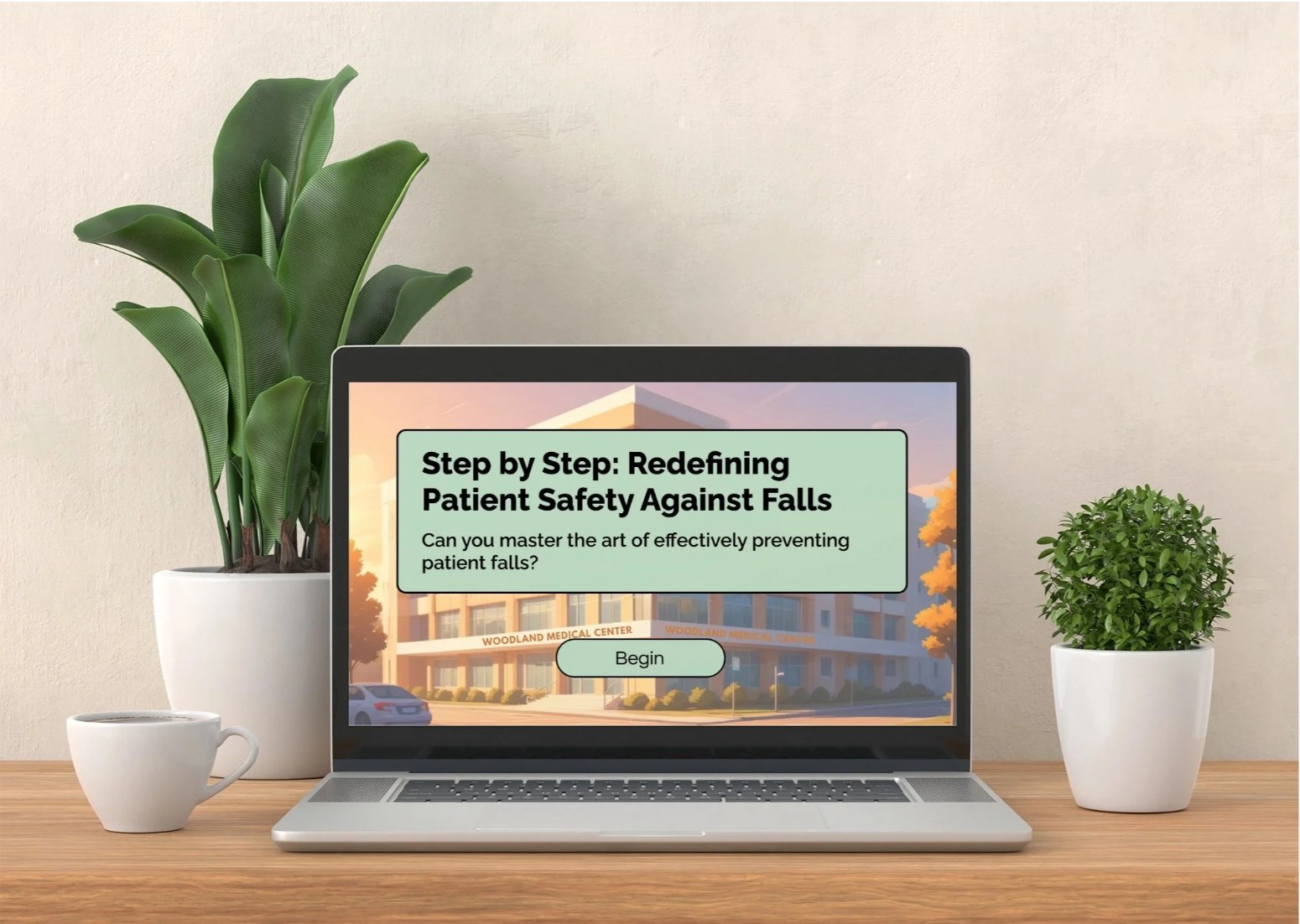
Laptop showing the title screen of Step by Step: Redefining Patient Safety Against Falls, with a Begin button over an illustration of Woodland Medical Center

Summary

This scenario-based learning experience is designed for new nurses to practice assessing and managing patients who are at risk of falls.

Try the Project
Client / Industry
Healthcare 
Audience
Nursing educators, newly hired nurses, experienced nurses
Responsibilities
Instructional design, action mapping, storyboarding, script writing, prototyping, course development, graphic and visual design
Tools used
Articulate Storyline 360, MindMeister, Google Docs, Figma, Affinity Designer
Format
Scenario-based course

01 · The problem

Patient falls are a persistent risk, and protocols aren’t followed consistently.

In many hospitals, patient falls are driven largely by inconsistent use of fall prevention protocols. New nurses on the front lines often struggle to put those protocols into practice, putting patients at risk and driving up costs.

02 · The solution

A self-paced, scenario-based learning experience.

  • Flexibility: Nurses train on their own schedule, around varying shifts and clinical duties.
  • Consistency: Every nurse learns the same protocols and best practices.
  • Scalability: New hires and existing staff stay up to date as needs change.
  • Risk-free practice: Realistic scenarios let nurses build confidence and sharpen decisions without any risk to patients.

03 · The process

From action map to final build

I followed the ADDIE model. In analysis, I interviewed nurses about patient falls and safety, identified key concerns, and created an action map and storyboard. After collecting feedback, I designed wireframes and mockups in Figma, then developed and refined interactive prototypes through iterative feedback rounds before finalizing.

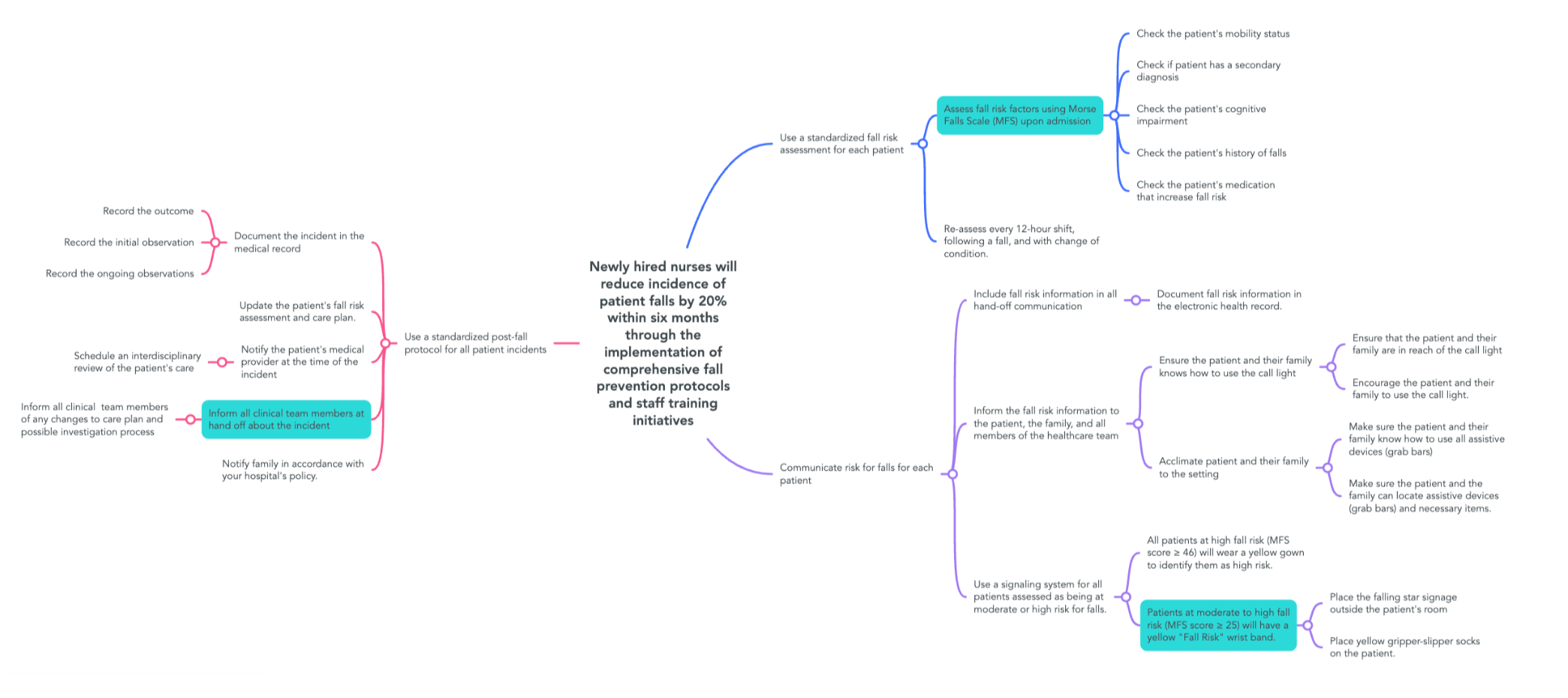
Action map with the goal at the center: newly hired nurses will reduce incidence of patient falls by 20% within six months through fall prevention protocols and staff training. Three branches show the key actions: use a standardized fall risk assessment, communicate fall risk for each patient, and use a standardized post-fall protocol.

Action map

I partnered with a Registered Nurse as my subject matter expert to build the action map and set a measurable goal: reduce patient falls through standardized protocols. The SME then identified the three highest-priority actions, which became the foundation of the course.

View full-size action map
  1. 1Use a standardized fall risk assessment for each patient
  2. 2Communicate fall risk for each patient
  3. 3Use a standardized post-fall protocol for all patient incidents
Storyboard

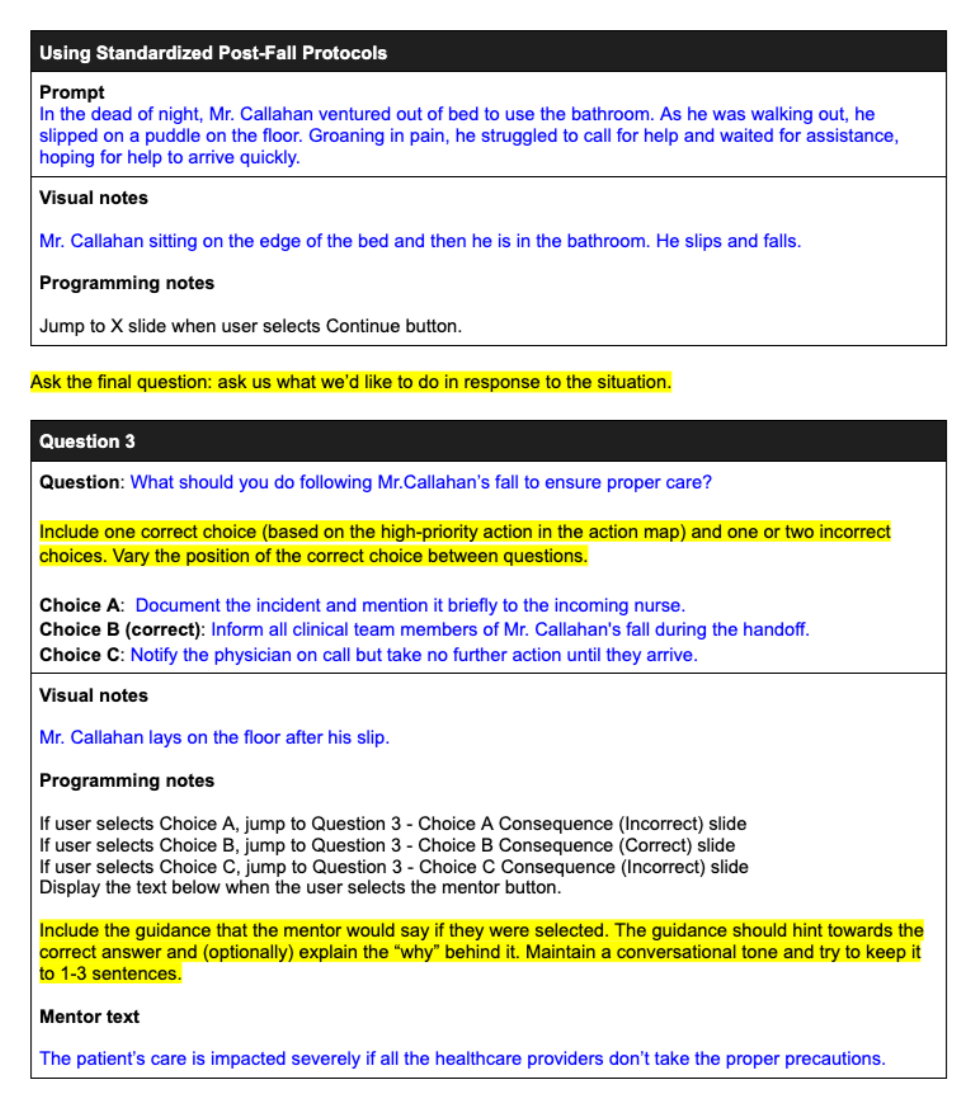
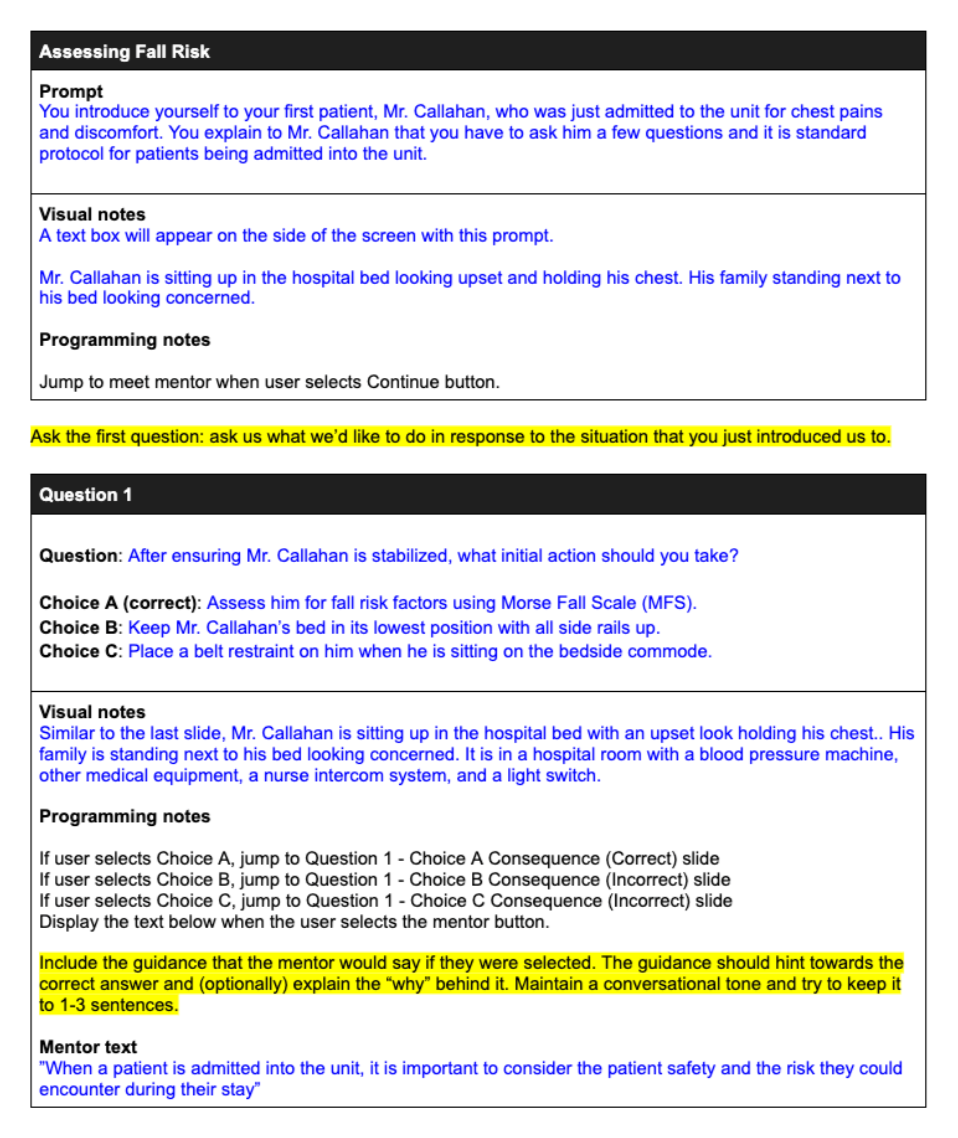
I wrote a text-based storyboard as the blueprint for the project, built to immerse learners through storytelling and “what if” scenarios. The learner plays a newly hired nurse facing challenging decisions during their first shift.

Like real life, every decision has consequences. A correct choice leads to a positive outcome and moves the story forward. A wrong choice leads to negative consequences and a chance to try again. When unsure, learners can ask a mentor character for guidance.

Storyboard page for Assessing Fall Risk: Mr. Callahan’s admission prompt and Question 1 with three choices, visual notes, programming notes and mentor text Storyboard page for Using Standardized Post-Fall Protocols: Mr. Callahan’s fall prompt and Question 3 with three choices, visual notes, programming notes and mentor text

Visual mockups

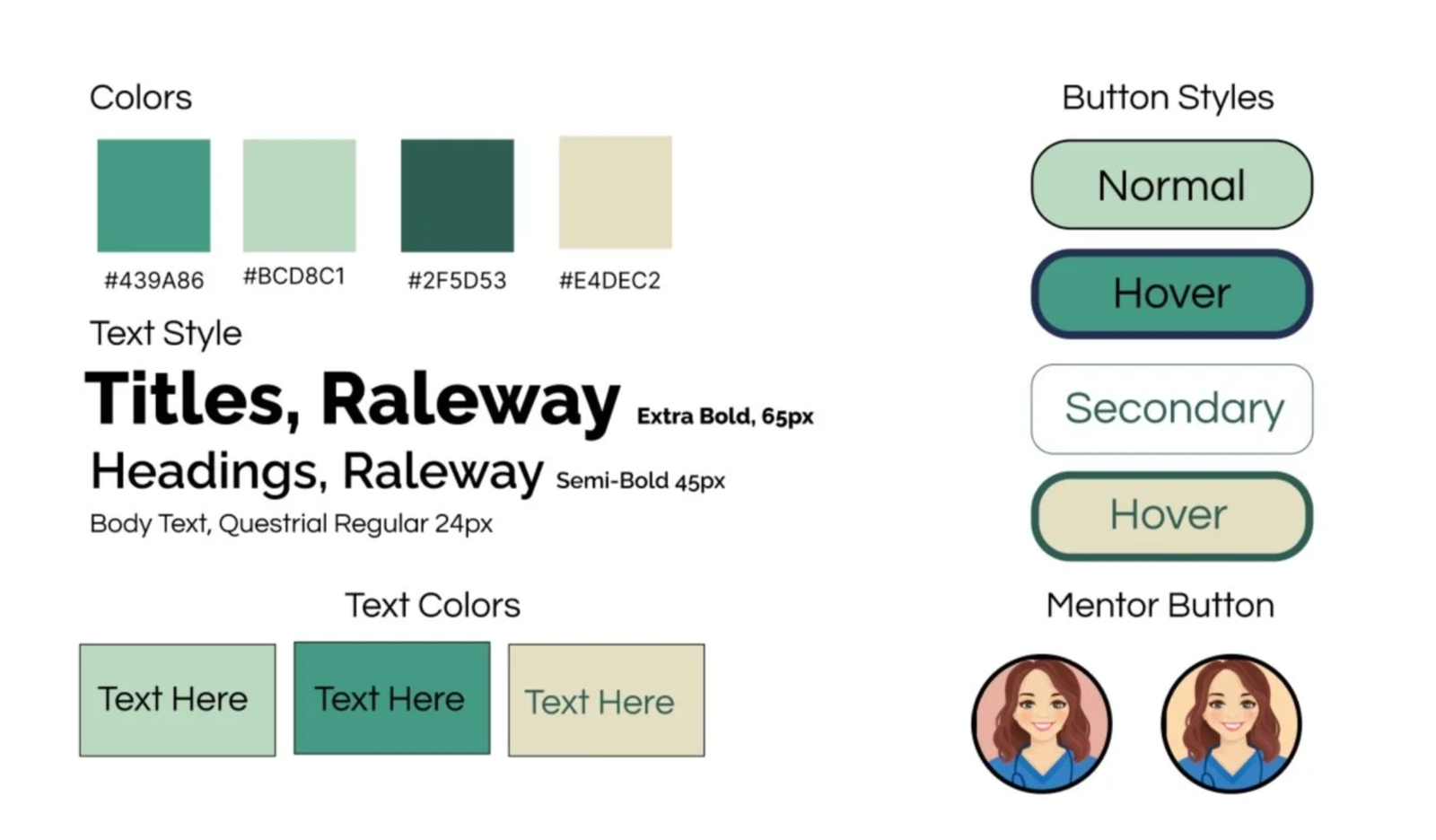
I created the mockups in Figma, which made it easy to iterate and fold in feedback. I chose green and blue for their strong ties to healthcare: green for health and healing, blue for trust and cleanliness.

I tested color combinations for text boxes and buttons for accessibility and readability before locking them into the style guide. Wireframes set the spacing and layout for each slide type and became the foundation for the high-fidelity mockups. I chose customizable character vectors to keep one consistent style across every scenario.

Style guide: colors #439A86, #BCD8C1, #2F5D53 and #E4DEC2; Raleway for titles and headings, Questrial for body text; normal, hover and secondary button styles; text color swatches; and the mentor button avatar
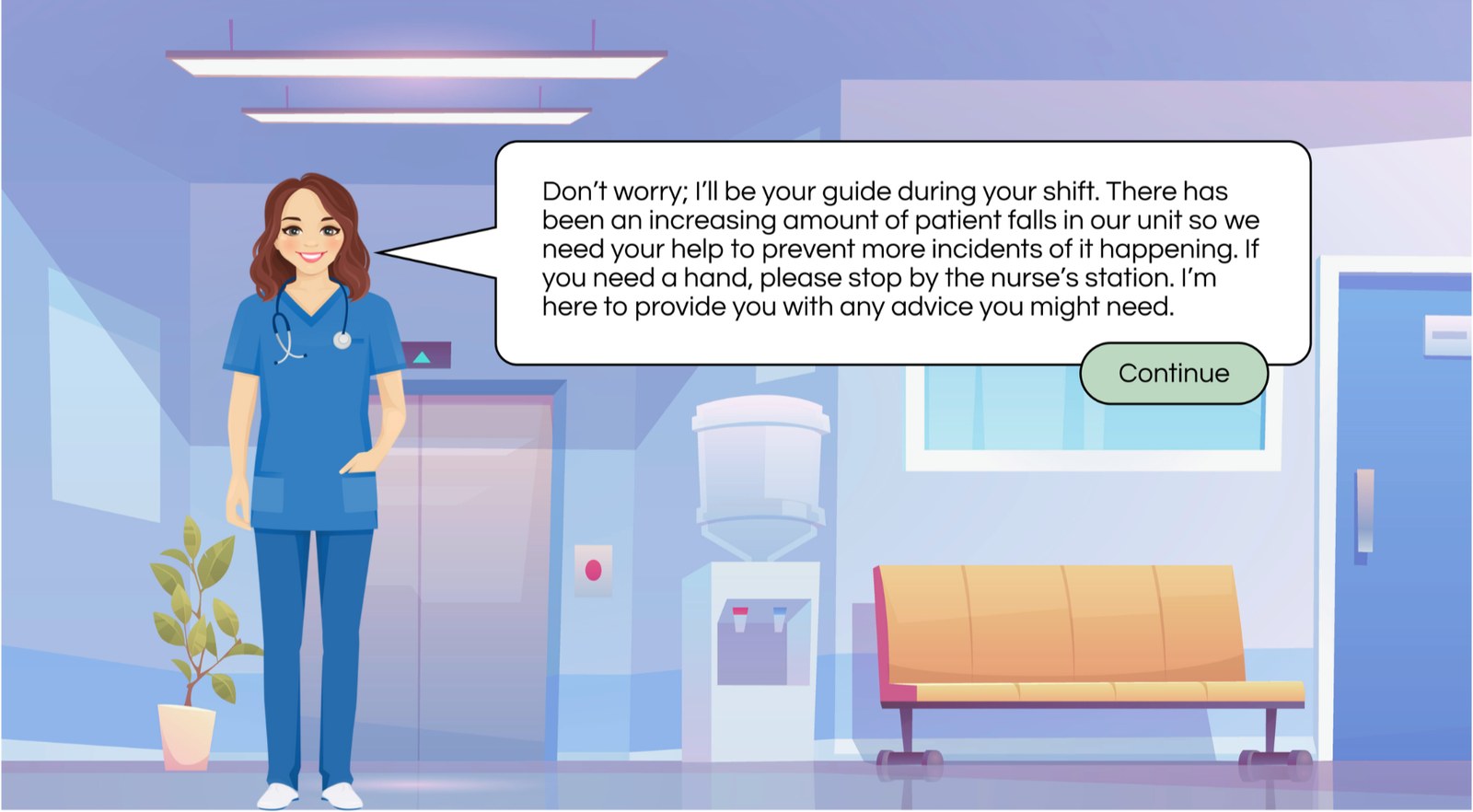
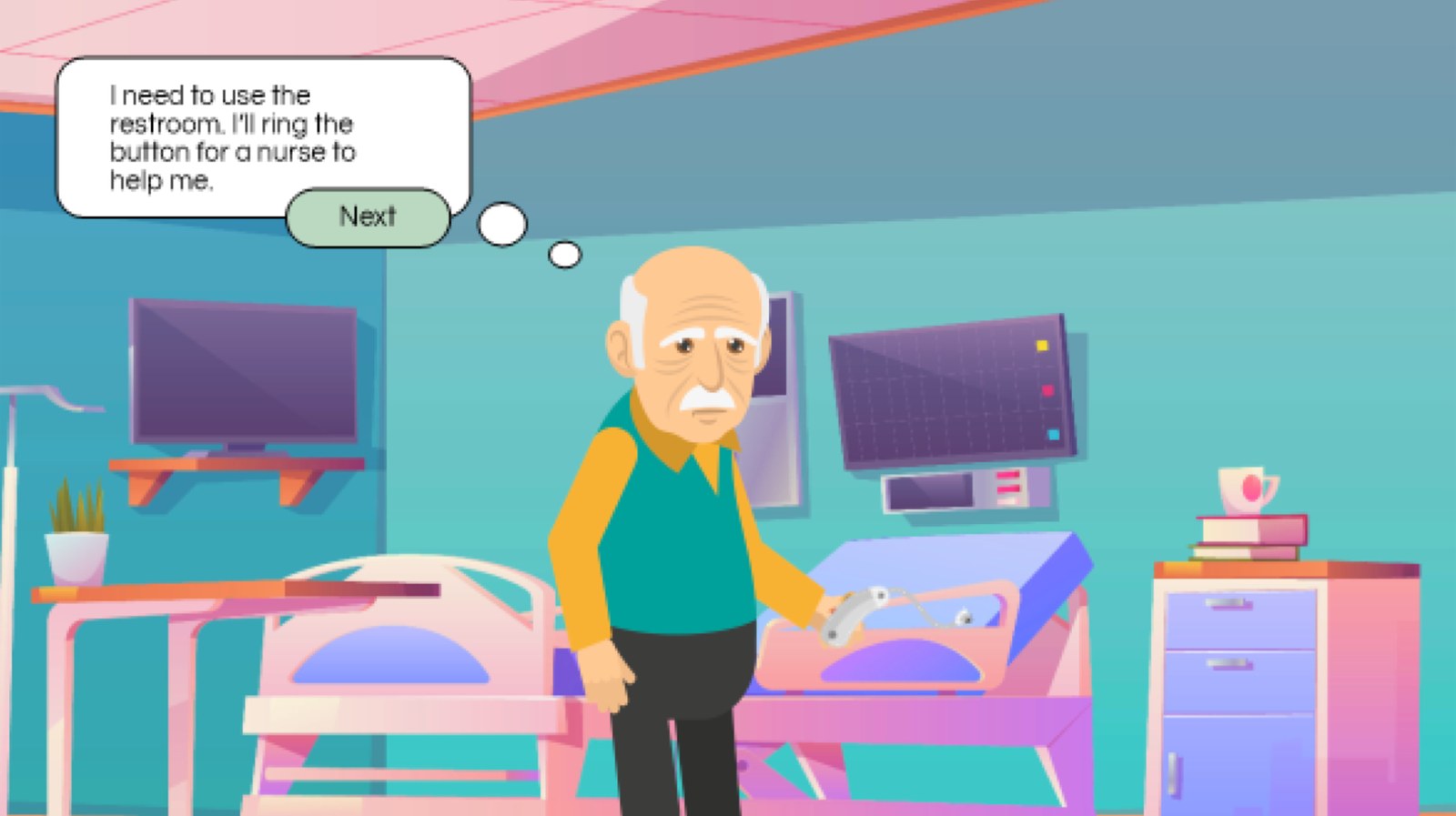
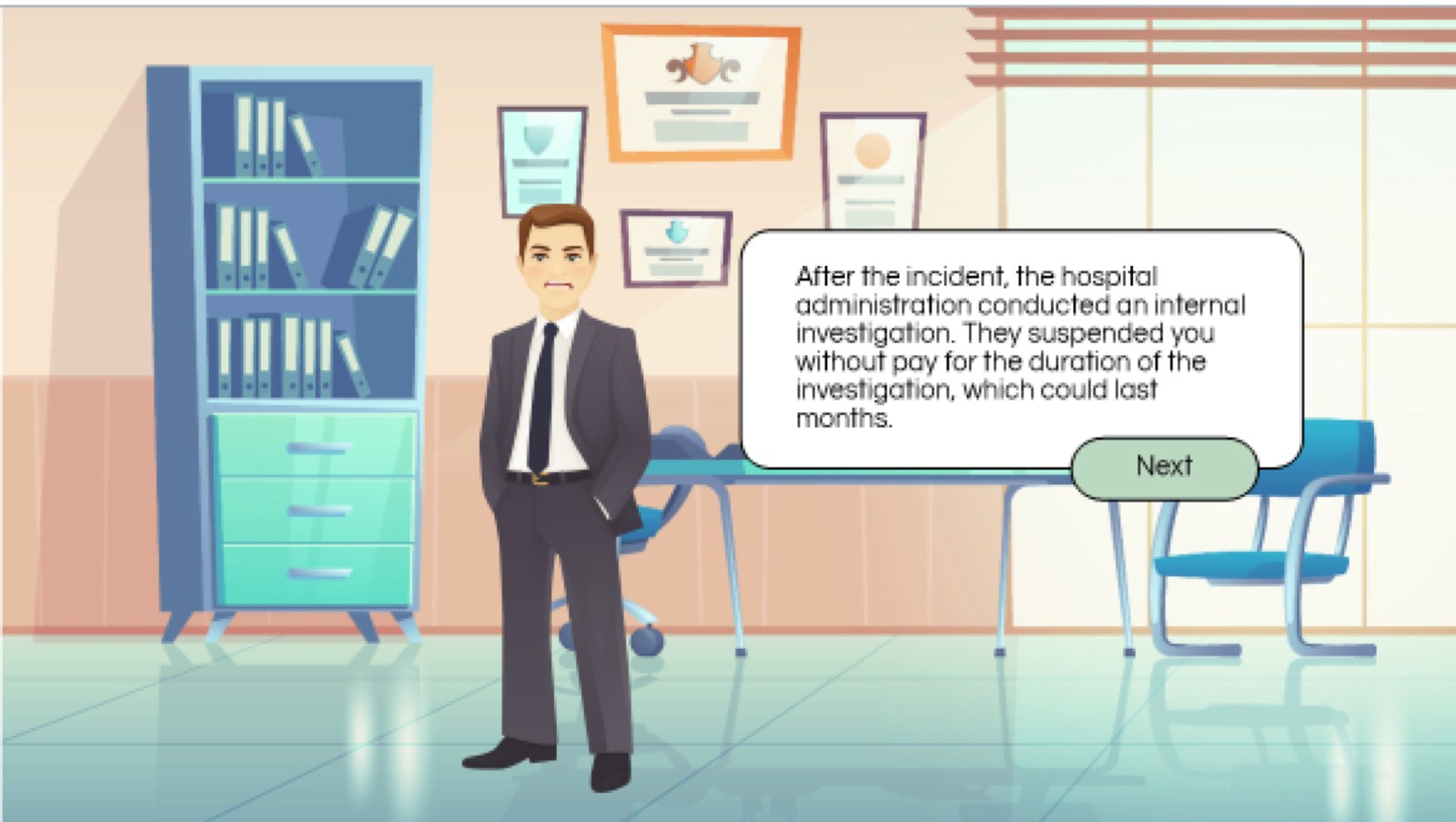
Mockup: the mentor nurse in a hospital hallway, offering to guide the learner through their shift Mockup: Mr. Callahan in his hospital room, reaching for the call button to get help to the restroom Mockup: a hospital administrator in an office, explaining the consequences of an incorrect choice

Development

With feedback from the prototype in hand, I moved into full development in Storyline 360. My goal was an immersive, intuitive experience that kept learners engaged from start to finish, so I added animations for seamless transitions between slides to make it feel fluid and interactive.

Every detail, from layout to interactivity, was designed so learners could focus on the content without distractions. It was incredibly rewarding to see the project come together in its final form.

The mentor nurse welcoming the learner at the start of their shift Sneak peek: try the course

04 · Intended impact

Built to move a measurable goal

The course is designed to support one goal: reducing patient falls by 20% within six months. Each scenario maps to one of the three high-priority actions from the action map, so learners practice exactly the behaviors that drive that goal.

05 · Takeaways

What I learned

Looking back, I’d add audio and voiceovers to make the scenarios even more immersive. I’m happy with the visuals, but next time I’d use more realistic imagery in place of illustrated characters, so the experience feels closer to real life on the unit.

See it the way learners do.

Try the Project Back to portfolio